Haha oh no, it's over! What are you even going to do with your life now? Try to like the new Superman movie? "Why is he lobster fishing? Why does he have a beard? Why are they playing
Lord of the Rings music in this trailer? Why isn't Superman dark and gritty like Batman?" and other things nerds say. (Just joshing, nerds, I'm not even not one of you! "Let he who is without the blog post on Batman cast the first 'Nerd!'" -John 8:7.) Speaking of Batman, I recently played the
Arkham Asylum game for the first time. It's pretty fun, but as I was mindlessly click-ordering Batman to beat prison thugs senseless, I also felt the pinpricks of mild disturbance. I was reminded of a quote by a long-time comics writer on the necessity of Batman's supervillains. I'm
too lazy to look up the quote unable to find the quote, but in essence, he said that without supervillains to fight, Batman ends up being a very unlikable character because he's then just a messed up, rich guy who beats up poor people. His solution to crime and poverty isn't improving the Gotham education system or inviting the poor into his home and feeding them, it's beating them up and throwing them into prison. Batman is basically the opposite of Jesus. (Apparently making The Joker Jesus. "Why so serious?" -John 8:8.)
Now, Batman doesn't have to be a delusional fascist, depending on how his character is interpreted. As much disdain as the campier versions of Batman have received, they actually tend to elide this problem pretty neatly through their sheer un-realism, whether it's
Ice Skates Batman,
Shark-Spraying Batman, or what have you. But the more disturbing aspects of Batman are especially hard to downplay in a video game like
Arkham Asylum because whereas a comic book or movie can center around Batman's fight with a supervillain, video games necessitate a steady supply of generic goons to fight.
Arkham Asylum tries to sidestep the inherent discomfort of seeing a rich, self-appointed hero beating up poor people by portraying all its thugs as
huge, spiky-haired (mostly white) bullies, but even so, the grossness of the power dynamic isn't quite swept under the rug. (On a slightly related note, the game also has to get creative with its boss battles whenever Batman faces a female villain because nothing shatters the careful fantasy that is Batman like having him hit a woman.) It's not that every Batman game has this problem--Lego Batman is adorable no matter who he's beating up!--it's just that any interpretation of Batman that consciously strives to be dark, adult, and realistic necessarily raises issues about Batman's power, class, and moral authority. All of which brings me back to...
 The Dark Knight Rises
! (Were you afraid you'd been tricked into reading some sort of Batman video games essay? I guess you were a little bit!) When the movie begins, it's been eight years since Harvey Dent died, and everyone is very sad and grim. Bruce Wayne has spent the past eight years hobbling around his mansion. He has a cane now, which he uses for hobbling. It later turns out he could apparently fix his leg fairly easily, but I guess he chooses not to for eight full years. We wouldn't understand, it's a Batman thing. Chief Gordon is sad too, and he begins a speech about the truth of Harvey Dent but then decides not to give it. Strangely, this is how he begins his actual speech, which seems like it would raise some questions regardless, but no time for that, we have characters to meet and Gothams to explode. Anne Hathaway is a demure maid who turns out to be a, ahem, CAT burglar. Joseph Gordon-Levitt, on whom I've had a man crush (homo) since
Angels in the Outfield Brick, is a young orphan cop who answers to Chief Gordon and who is getting increasingly fed up with The System.
At its beginning, the movie seems to be a critique of right-wing politics. Public funding for institutions like schools, orphanages, and reform programs appears nonexistent, and the private sector's wealth is concentrated to a small percentage of citizens (1%, perhaps?) who care little for the poor and who are mostly interested in increasing their own influence and power. Even Bruce Wayne has failed Gotham's underprivileged, enjoying hobbling around unnecessarily on his cane while his charity funds dry up. With few legitimate economic opportunities, the poor have largely turned to lives of crime. Unfortunately for the poor, though, in the wake of Harvey Dent's death, harsh anti-crime laws have been passed (and also possibly a law that forbids anyone from even mentioning the Joker), and the majority of criminals have been thrown in prison. This system is hell for Gotham's poor, while Gotham's wealthy believe they're living in a golden age.

Enter Bane, accompanied by the catchiest little chant in the world. ("Ben,
please stop yelling 'Dehshay bahsaruh' at the breadmaker." -my mom) At first, I was pretty excited to see how Bane and his army would figure into the movie's larger political themes. From what we saw in the beginning of the movie, it seemed like we were at least supposed to see where Bane was coming from, what with how everybody in Gotham but for the very richest were broke and/or in prison. Then, of course, Bane loses our sympathy by blowing everything up. Literally, like everything. The football field explodes! The subways explode! Richard Alpert explodes! ("All we found left were his perfect mascara eyes" -scene from
The Dark Knight Rises Extended Edition.) Things get very French Revolution-y very quickly, and what began as an uprising of the oppressed quickly devolves into an anarcho-fascist state where Bane and his armed thugs rule the city.
According to Wikipedia (it's called journalistic research, look it up! On Wikipedia!), Christopher Nolan claims
The Dark Knight movies are apolitical, which is exactly what I'd lie if angry people were yelling at me.
The Dark Knight Rises is very clearly thinking about the political issues Batman raises as a character: where does authority justly lie? What happens when a supposedly just authority abuses his or her power? How should society deal with poverty and crime? The movie approaches these issues, flirts with them, and then ultimately doesn't really go anywhere with them. Or at least doesn't go very far. First base, maybe. I don't know what I'm doing with this analogy anymore. To a certain extent, I appreciate Nolan's refusal to give a grand political statement and to select a particular ideology as the be-all, end-all solution to society's problems. Instead, he seems more interested in exploring systems both right-wing and left and is content tapping into the cracks of these systems without ultimately canonizing any one over the other. That said, my disappointment with this film comes from what I think is its failure to satisfactorily produce any kind of meaningful concluding statement about its larger political themes, especially in regards to the issues Batman raises himself.
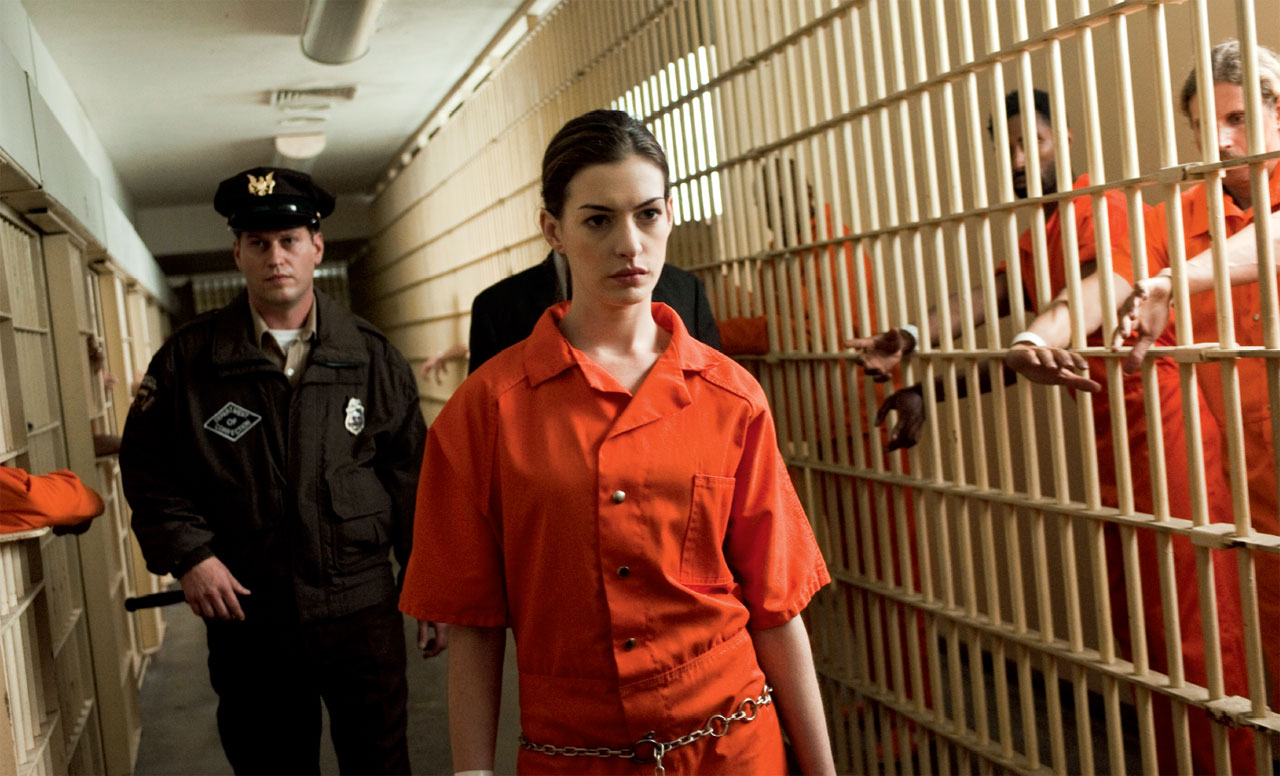
In the ending of the film, Nolan seems to want to have it both ways, validating Batman the hero and Bruce Wayne the humanitarian, which Alfred suggested early on in the movie were roles in conflict. At the end of the movie, the orphans' money is a-flowing again, and Joseph Gordon-Levitt is ready to don the Bat-stume and become the younger, hotter face of Batman. By the closing scene, JGL has expressed his disgust with and resignation from The System by tossing his badge away in a
High Noon/
Dirty Harry homage. Shortly before this, Batman tells JGL something or other about the unreliability of any system and about the power of symbols like the Batman. This is about as close as the film gets to resolving its various political themes and ideas, and as such, it was total BS because a) what does that even mean? and b) Batman is not just a symbol floating majestically outside The System, he's a self-appointed crime fighter who raises numerous questions about The System itself and of which he is a participant, not to mention all the questions he raises about poverty and wealth and crime and how he, and vigilantism, and all sorts of things fit into the larger societal picture. I know the orphans get to eat sandwiches now thanks to Batman's money, but wasn't it partly Batman's fault that the orphans faced poverty and crime after orphan graduation in the first place? Not to mention the fact that maybe it's bad in and of itself that children's lives should hang on the whims of unreliable rich people? And are we supposed to take it that Robin will be a more morally upright Batman than Bruce Wayne was or will he just be a sexier Batman? (Just kidding, it is self-evident that he will be a sexier Batman.) I understand and accept "ambivalence to the success of human institutions" as a legitimate perspective, but
The Dark Knight Rises's ending didn't strike me as resigned and nihilistic a la the masterful finale of
Watchmen so much as just muddled and confused.
However, even as I type these words and formulate fresh, new ways the movie dissatisfied me on a thematic level, purely on a geek level, this movie won my heart, proposed, and now they're married and my heart has a tattoo of Batman on it. So many things in this movie made me grin like an idiot! I loved the way the movie ended up incorporating the classic "Gotham in Isolation" storyline a la
Batman: No Man's Land. And it was very clever and satisfying the way the movie mythologized the previous two films to form a story in this movie that brought everything together into one complete arc. Although I have to point out again, I know Heath Ledger passed away and everyone wants to respect his memory and final performance,* but nonetheless, it did feel a little odd to me that no one in the movie even
mentioned the Joker. Did he die in the movie world too? He couldn't have been in prison or he would've been running around having the time of his life after Bane's prison break. At any rate, I don't think it would have been disrespectful to Ledger and probably would have benefited the film as a whole if someone had at least mentioned the Joker. As is, the movie goes out of its way in going out of the Joker's way, and he was just too monumental a presence in
The Dark Knight to be completely left out of this film without its feeling awkward.
 |
| <3 <3 <3 |
But even though the Joker didn't appear in this movie even in words, everyone else certainly seemed to be in it! Ra's al Ghul was back! The Scarecrow had a great cameo! I had no idea this movie was going to be so full of twists! ("More like
The Dark Knight Surprises!" Ben repeated to his girlfriend, as if the problem the previous three times were that she hadn't heard him.) Miranda Tate's secret identity as Talia al Ghul was at once very surprising and then immediately so obvious once she said who she was. (Although your foreknowledge of her existence hinged on how familiar you were with the Batman mythos beforehand, which the guy who just name-dropped
No Man's Land a paragraph ago was, if you can even believe it.) Forget Talia al Ghul though! Robin! My grin nearly took over my face as a separate, Batman-loving entity of its own when that secretary revealed that JGL was actually Robin! It was especially so great specifically because Christopher Nolan had previously said in an interview that Robin would never appear in his Batman movies. And it turned out he was just straight-up lying! (I told you he was a liar.) Ha ha! What a wonderful, dishonest man!
So, as mixed feelings as I have about this movie thematically, all those mixed feelings (almost) just melt away in the pure, blazing heat of my geeky affection and my crush on new Hot Batman. TWO BATARANGS UP!
*Oops, I meant the Joker and not Dr. Parnassus.